How long do AC units last in Las Vegas
Across the country, a well maintained central air conditioner typically lasts about 15 to 20 years. In Las Vegas, the answer is often shorter. Between long, triple digit summers and constant desert dust, many systems in the valley reach the end of their useful life closer to 10 to 15 years.
That does not mean your system will fail the day it turns ten. How long your AC lasts depends on the quality of the installation, how hard the system works and how well it is maintained. Below, our team at AGEVAC Heating and Cooling explains what shortens the life of an air conditioner in the desert, how long different HVAC systems last, the warning signs that your unit is wearing out and what you can do to get the most years out of it.
Why the desert climate is tough on air conditioners
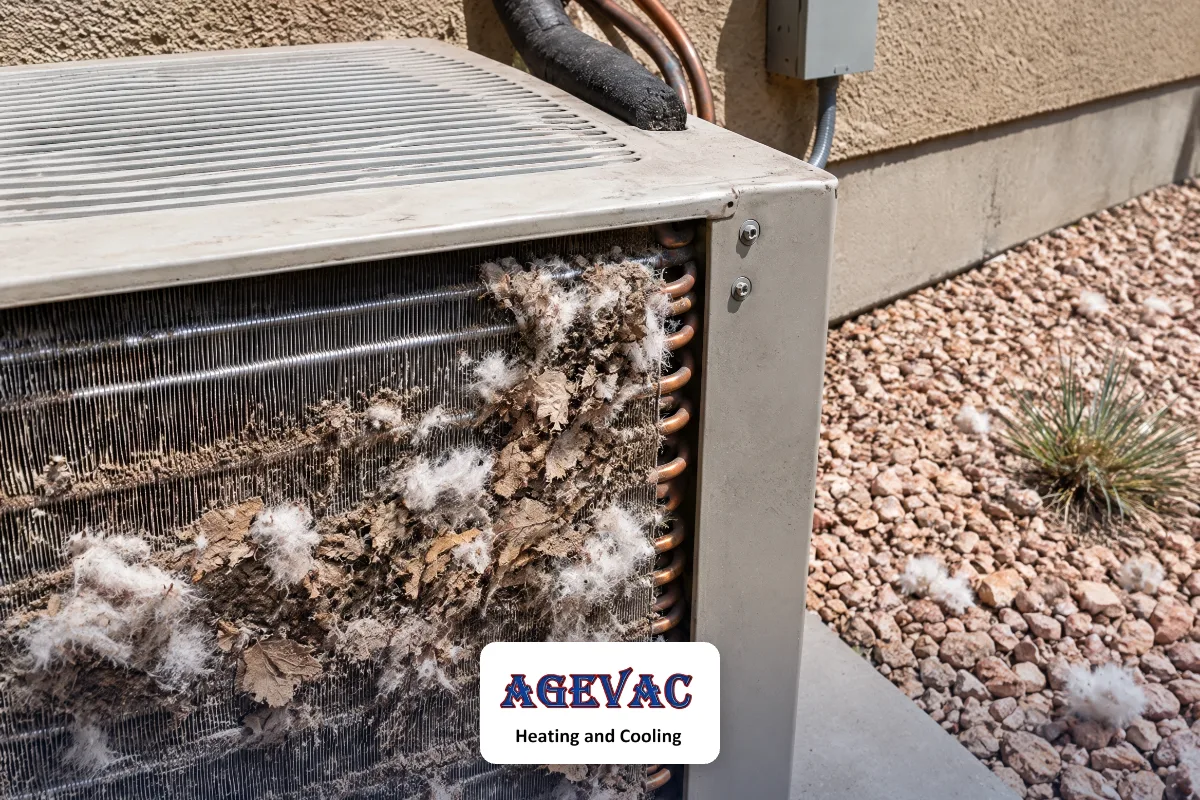
Las Vegas summers regularly push past 110 degrees, and air conditioners in the valley often run from April through October. That adds up to far more operating hours each year than a system in a milder climate, which means more wear on the compressor, fan motors and electrical parts. Blowing dust coats the outdoor coil and forces the system to work harder, while intense sun breaks down wiring, refrigerant line insulation and the outdoor cabinet over time.
Summer monsoon storms add another challenge. Lightning, power surges and sudden outages can damage compressors and control boards, and the heavy dust that blows in with storms packs into outdoor coils. Units installed on rooftops or in full afternoon sun face the harshest conditions of all.
An air conditioner rarely fails all at once. Smaller parts usually wear out first, and replacing them on time can add years to the life of the system:
- Capacitors: These help the compressor and fan motors start. Heat breaks them down, so in Las Vegas they often fail years before the rest of the system.
- Contactors: This switch turns the outdoor unit on and off and can pit or stick over time.
- Condenser fan motors: These run in extreme heat all summer and can overheat as they age.
- Compressors: The heart of the system. A compressor failure on an older unit is often the point where replacement makes more sense than repair.
How long do HVAC systems last by type
- Central air conditioners: about 15 to 20 years nationally, often 10 to 15 years in Las Vegas
- Heat pumps: about 10 to 15 years, since they handle both heating and cooling throughout the year
- Gas furnaces: about 15 to 20 years, and often longer here because furnaces run far fewer hours in our mild winters
- Ductless mini splits: about 15 to 20 years with regular cleaning and maintenance
- Packaged rooftop units: about 15 to 20 years, although constant sun exposure can shorten that range
- Window and portable AC units: about 8 to 10 years
These are general ranges. Two identical systems installed on the same street can have very different lifespans, and these factors matter most:
- Installation quality. A system that is sized correctly, charged with the right amount of refrigerant and connected to well sealed ductwork runs more efficiently and lasts longer.
- Maintenance. Annual tune ups keep coils clean, catch weak parts early and keep electrical connections tight.
- Run time. A thermostat set very low during the hottest months adds a lot of extra run time and wear.
- Location of the outdoor unit. Units with good airflow and some afternoon shade run cooler than units packed into tight side yards or baking on a roof.
- Equipment quality. Brand matters less than many people think. Trane, Carrier, Lennox, Goodman and other major brands can all last a long time when they are installed and maintained properly.
Signs your AC is nearing the end of its life
- Your system is more than 10 to 12 years old
- You are calling for repairs every summer
- Energy bills keep rising even though your usage has not changed
- Some rooms never cool down, or the system runs nonstop on hot afternoons
- The unit makes grinding, rattling or buzzing noises
- Refrigerant leaks keep coming back after they are repaired
- Your system uses R22 refrigerant, which is no longer produced in the United States
If several of these sound familiar, it may be time to start planning for a replacement before your system fails on the hottest day of the year.
Not sure how old your system is? Look for the data plate on the side of the outdoor unit. The manufacture date is often printed on it or built into the serial number, and our technicians can help you read it during any service visit.
Should you repair or replace your AC
A simple rule of thumb can help. Multiply the age of your system by the cost of the repair. If the total is more than $5,000, replacement is usually the better investment. For example, a $600 repair on a 12 year old system equals $7,200, which points toward replacement. Another guideline is the 50 percent rule: if a repair costs more than half the price of a new system, replacing it often makes more sense.
R22 systems need extra attention. Air conditioners installed before about 2010 commonly use R22 refrigerant, also known as Freon. Production and import of R22 ended in the United States on January 1, 2020, so the remaining supply comes from recovered and recycled stock and can be very expensive. If an older R22 system develops a refrigerant leak, the cost of the repair alone can make replacement the smarter choice.
A new system also does more than restore reliable cooling. Federal efficiency standards for the Southwest region, which includes Nevada, have increased over the years, so a new air conditioner uses noticeably less energy than one installed 15 years ago. Newer systems run more quietly and hold a steadier temperature from room to room, which matters in a city where the AC runs for half of the year.
How to make your AC last longer
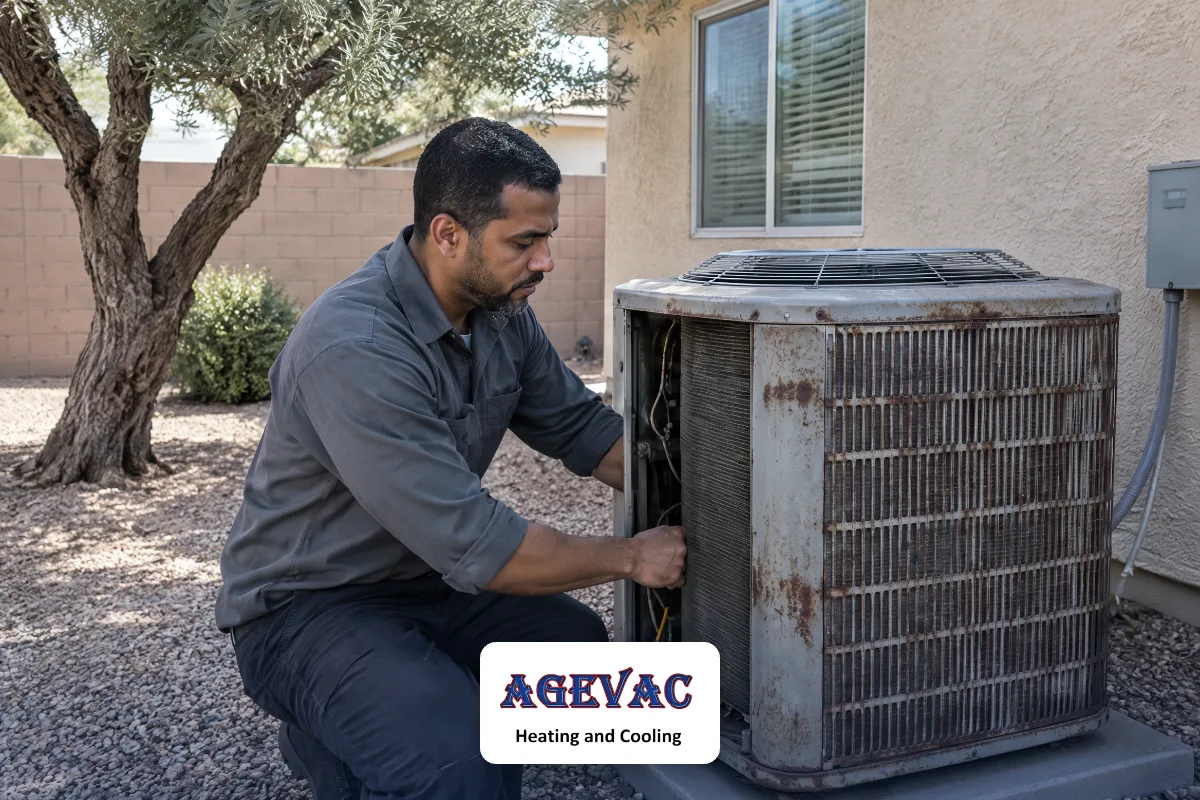
- Schedule a tune up every spring. Annual maintenance catches worn parts before they fail. Learn more about our AC tune up and maintenance service.
- Change your air filter often. During the summer, check it monthly and replace it as needed.
- Keep the outdoor unit clear. Leave at least two feet of open space around the condenser and keep plants and debris away from the coil.
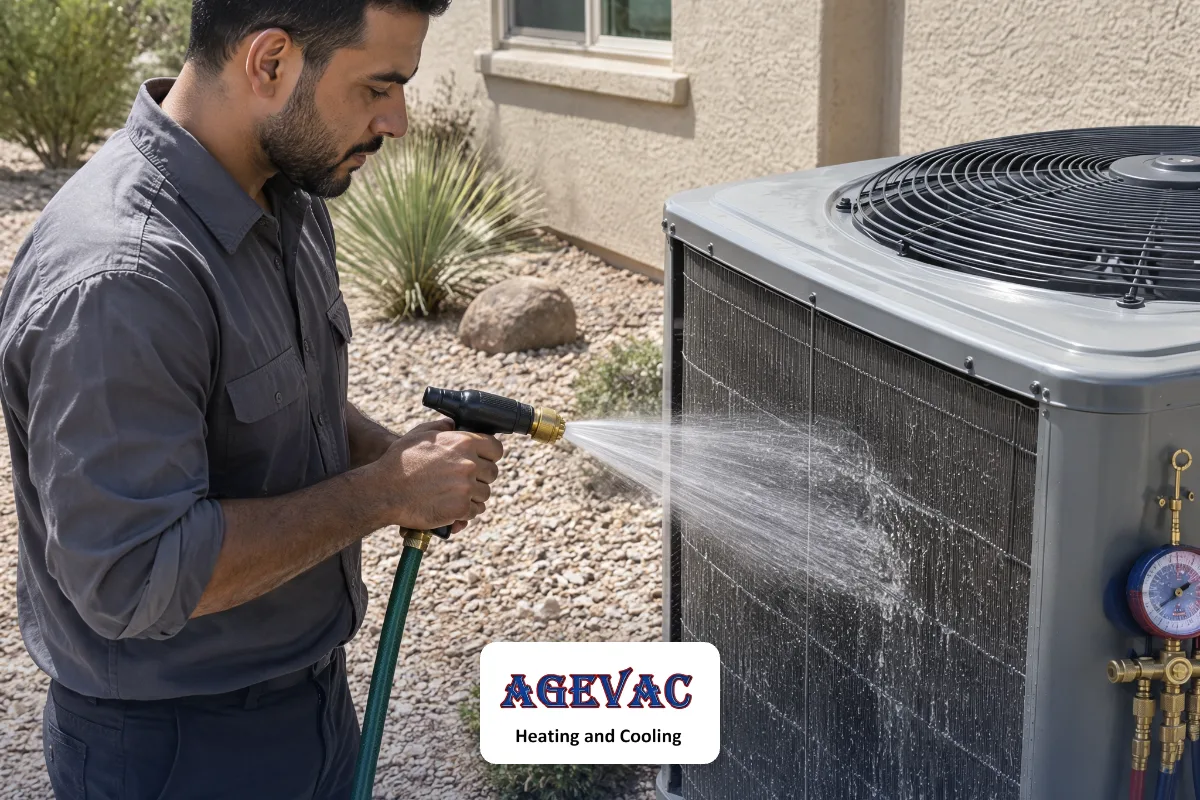
- Rinse the outdoor coil gently. With the power off, a gentle spray from a garden hose helps remove dust buildup. Never use a pressure washer.
- Use a programmable or smart thermostat. Raising the temperature a few degrees while you are away reduces run time.
- Keep vents open and unblocked. Closing vents in unused rooms raises pressure in the ductwork and makes the system work harder, so leave supply and return vents open and clear of furniture.
- Fix small problems early. Strange noises, weak airflow or warm air are reasons to call before a minor issue becomes a major repair.
The best time to evaluate an aging system is in the spring or fall, before it faces another season of triple digit heat. If replacement is on the horizon, planning ahead lets you schedule the work when it is convenient instead of waiting in a hot house during the busiest weeks of the year.
Get an honest assessment from AGEVAC
If your air conditioner is getting older or struggling to keep up, our licensed technicians can inspect your system and give you an honest recommendation, whether that means a simple AC repair or planning for a new system. We serve homeowners across Las Vegas, Henderson, Summerlin, Spring Valley and the entire valley.
Call (702) 720-0161 or book online. We are available 24/7. Heating matters too, so if your furnace is acting up this winter, read our guide on why your furnace is blowing cold air.
How long do AC units last FAQs
Here are answers to the questions we hear most often from Las Vegas homeowners about air conditioner lifespan.