Why is my furnace blowing cold air
Few things are more frustrating on a chilly Las Vegas night than turning up the heat and feeling cold air pour out of the vents. Desert winters may feel mild during the day, but overnight temperatures across the valley regularly drop into the 30s, and that is exactly when you need your heating system to work.
The good news is that a furnace blowing cold air usually comes down to a short list of causes. Some take only a few minutes to check on your own, such as a thermostat setting or a dirty air filter. Others, like a failed igniter or a cracked heat exchanger, call for a licensed technician. Before you call for service, work through this quick checklist. Many winter service calls turn out to be one of these items.
- Set the thermostat to HEAT and the fan to AUTO
- Raise the temperature setting at least three degrees above the current room temperature
- Replace the thermostat batteries if the screen is blank or dim
- Check the air filter and replace it if it is dirty
- Make sure the furnace power switch is on and the breaker has not tripped
- Confirm the gas valve to the furnace is open
- Make sure the furnace front panel is closed securely
- Look for a blinking light or error code on the furnace control board
If the air from your vents is still cold after these checks, the sections below explain what else may be going on.
Check your thermostat and give the furnace time to warm up
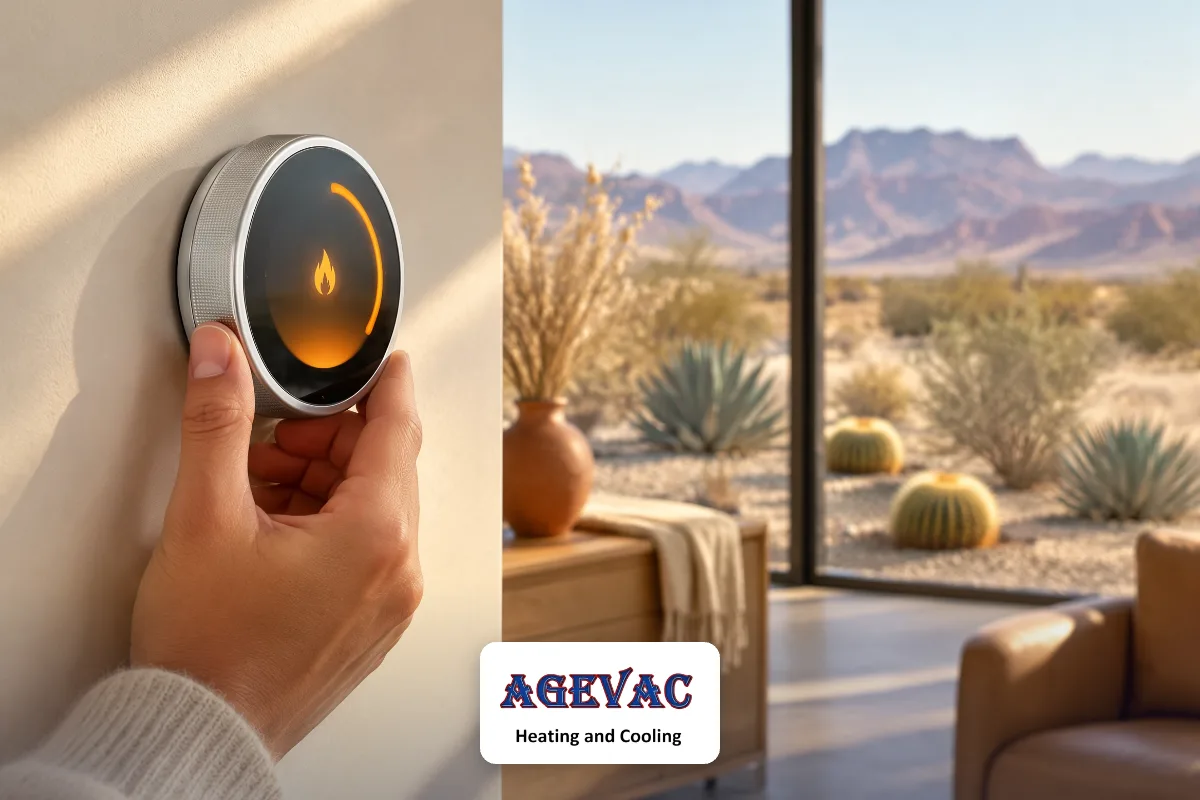
Before you assume the worst, take a close look at your thermostat. If the fan is set to ON instead of AUTO, the blower runs nonstop, even when the furnace is not actively heating. Between heating cycles, that means room temperature air moving through the vents, which feels cold against your skin. This is one of the most common reasons homeowners find their heater blowing cold air.
Switch the fan setting to AUTO, confirm the system is set to HEAT and make sure the temperature setting is a few degrees above the current room temperature. If the display is blank or dim, replace the batteries. Smart thermostats can also lose their WiFi connection or follow a schedule you forgot about, so check for an active schedule or away mode that may be holding the temperature down.
Also give the furnace a few minutes. Modern furnaces go through a short startup sequence. The inducer motor clears the burners, the igniter lights the gas and the heat exchanger warms up before the main blower turns on. You may feel a brief rush of cool air at the start or end of a cycle as air left in the ductwork clears out. That is normal, but if the air is still cold after about five minutes of run time, something else is going on.
Replace a dirty air filter and check your ductwork
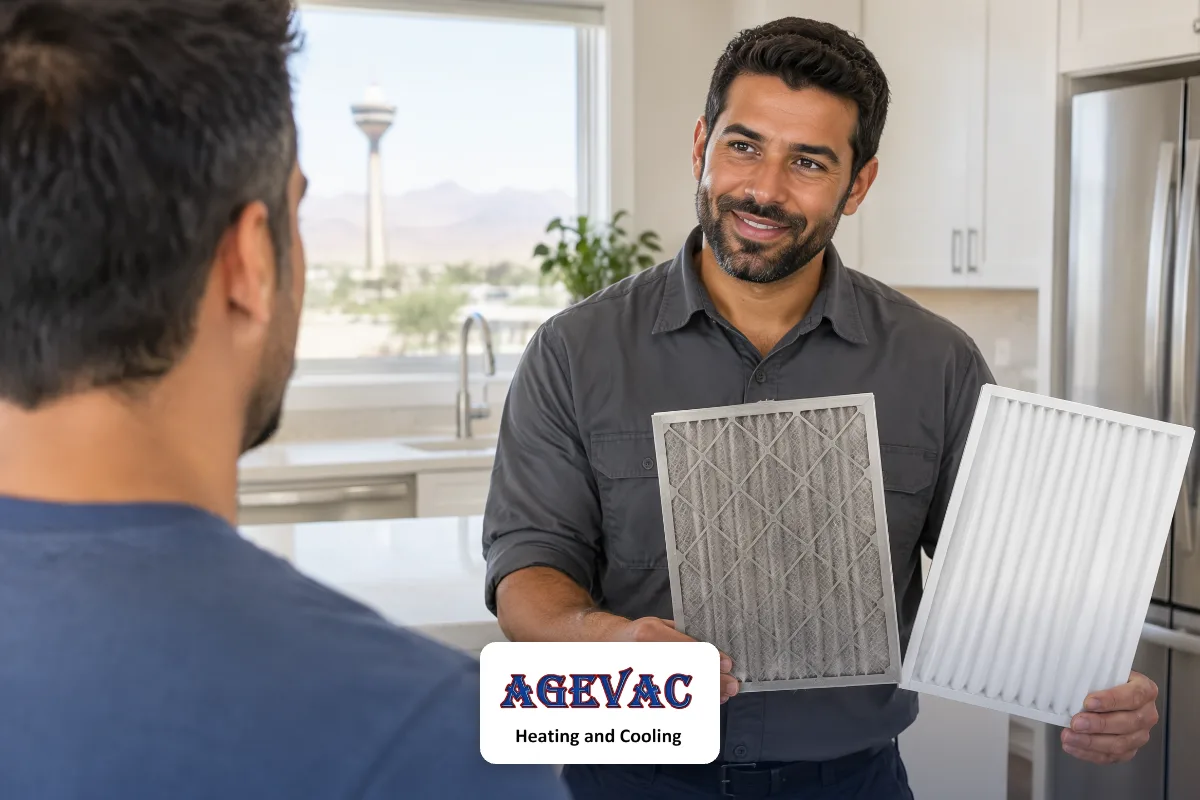
A clogged air filter is one of the most common reasons a furnace blows cold air. When airflow is restricted, heat builds up inside the furnace. To protect itself, the furnace trips a safety device called the high limit switch, which shuts off the burners while the blower keeps running. The result is cool air from the vents and a system that cycles on and off.
Check your filter every month during heating season and replace it at least every one to three months. Las Vegas dust, pet hair and nearby construction can clog filters even faster. When you buy a replacement, match the size printed on the edge of the old filter and install it with the airflow arrow pointing toward the furnace.
Leaky ductwork causes similar symptoms. In many Las Vegas homes, ducts run through the attic, where winter air is cold. If a duct is torn, crushed or disconnected, warm air escapes into the attic before it reaches your rooms, and cold attic air can be pulled into the system. Rooms that feel much colder than the rest of the house or weak airflow from certain vents are common signs. A technician can inspect accessible ductwork during a service visit, and if your ducts are full of dust and debris, learn more about our air duct cleaning service.
Problems that keep the burners from lighting
If your furnace cannot light its burners, it cannot make heat. Older furnaces use a standing pilot light that can go out because of a draft or a dirty pilot assembly. Most newer furnaces use an electronic hot surface igniter, which can crack and fail with age. If the igniter glows but the burners never light, the problem may be the gas valve or the igniter itself.
Dirty flame sensor. The flame sensor is a small metal rod that confirms the burners are lit. Over time it collects a thin layer of carbon. When the sensor cannot detect the flame, the furnace shuts off the gas within seconds while the blower keeps pushing unheated air through your home. A furnace that lights, runs briefly and then shuts off is a classic sign.
Gas supply. Check that the gas valve leading to your furnace is open, with the handle running parallel to the gas line, and that the furnace power switch near the unit is on. If your water heater or range is not working either, contact Southwest Gas to confirm service at your address.
Clogged condensate line. High efficiency furnaces produce water that drains through a small condensate line. If that line clogs, a safety switch stops the burners from firing to prevent water damage. Water around the base of the furnace is a common sign.
If you smell gas at any point, do not try to relight anything. Leave the home right away and call Southwest Gas or 911 from a safe location.
Heat pump and electric furnace blowing cold air
Many Las Vegas homes are heated by a heat pump rather than a gas furnace. On cooler mornings, frost can build up on the outdoor coil, and the system switches into defrost mode for a few minutes to melt it. During defrost, the air from your vents can feel cool. This is normal as long as it only lasts a short time.
A heat pump also delivers air that feels warm rather than hot, usually somewhere in the 90s at the vent. That gentler heat is normal. If the air is truly cold for long stretches, the outdoor unit stays covered in ice or the system never shuts off, the heat pump may have a refrigerant leak, a failed reversing valve or a defrost control problem. Schedule a heating repair visit so a technician can find the cause.
Some homes, condos and townhomes use an electric furnace or an air handler with electric heat strips. If an electric furnace is blowing cold air, the blower is working but the heating elements are not. Common causes include a tripped breaker for the heating elements, a failed sequencer or relay, a burned out element or a tripped limit switch. Many electric systems have more than one breaker. If a breaker trips again after you reset it, leave it off and call a licensed technician.
When to call a professional
Most furnaces built in the last twenty years have a control board with a small LED light that blinks a code when something goes wrong. With the power still on, look through the small window on the lower furnace panel and count the flashes, then match the pattern to the label inside the panel door. Write the code down before you turn anything off, since many furnaces clear it when power is cut.
If you have checked the thermostat, replaced the filter and confirmed the gas is on, but your furnace is still blowing cold air, it is time to call a professional. Call right away if you notice any of the following:
- A flashing error code or blinking light on the furnace control board
- The furnace turning on and off every few minutes
- Burning, electrical or gas odors
- Loud banging, squealing or grinding noises
- Yellow or flickering burner flames instead of steady blue flames
When you call AGEVAC, a licensed technician runs a full diagnostic on your heating system, finds the real cause and explains your options before any work begins. Learn more about our heating and furnace repair service.
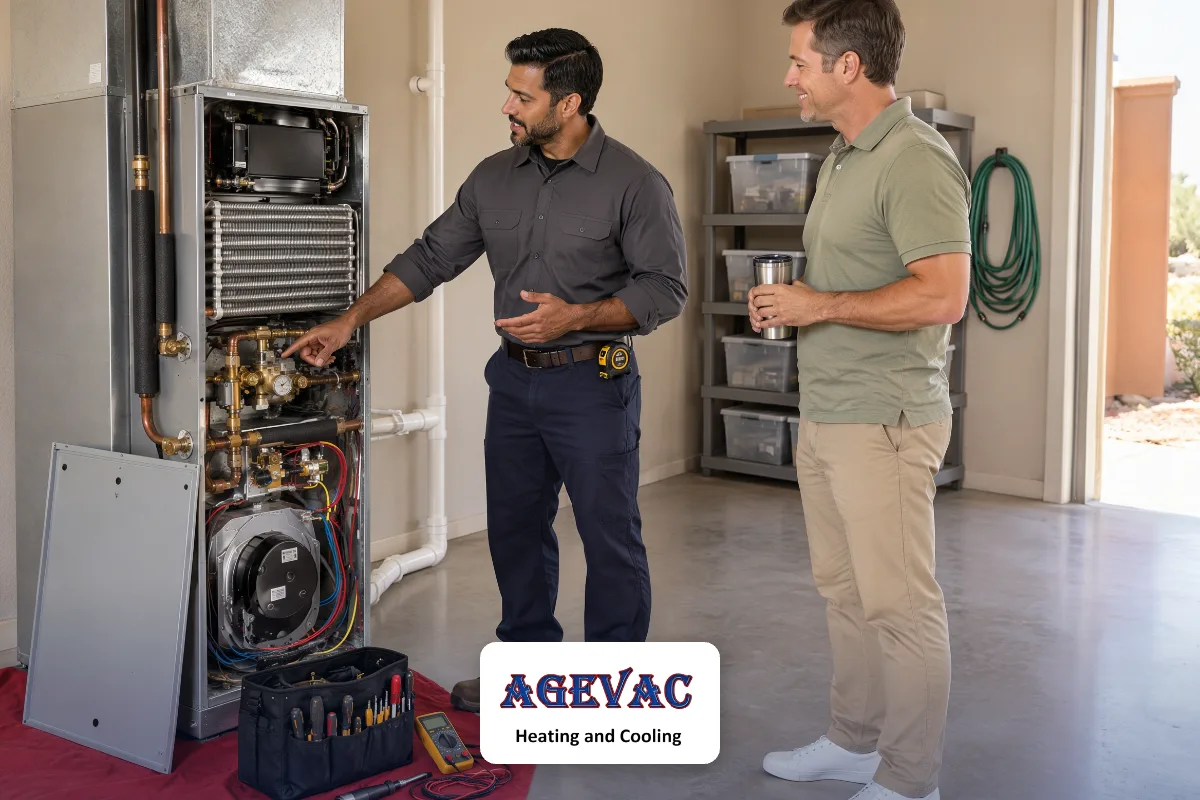
Prevent cold air problems with a furnace tune up
Most of the problems above can be caught early with annual maintenance. During a furnace tune up, we clean the flame sensor, inspect the igniter, test the safety controls, check gas pressure and examine the heat exchanger for cracks that could lead to carbon monoxide problems. The best time to schedule is in the fall, before the first cold snap.
Need help now? Call (702) 720-0161 or book online. AGEVAC is available 24/7 for heating repair across Las Vegas, Henderson, North Las Vegas, Summerlin and the surrounding communities. Planning ahead for summer? Read our guide on how long AC units last in Las Vegas.
Furnace blowing cold air FAQs
Here are answers to the questions Las Vegas homeowners ask us most often when a furnace starts blowing cold air.